Not a long post today. More of an update/opinion piece.
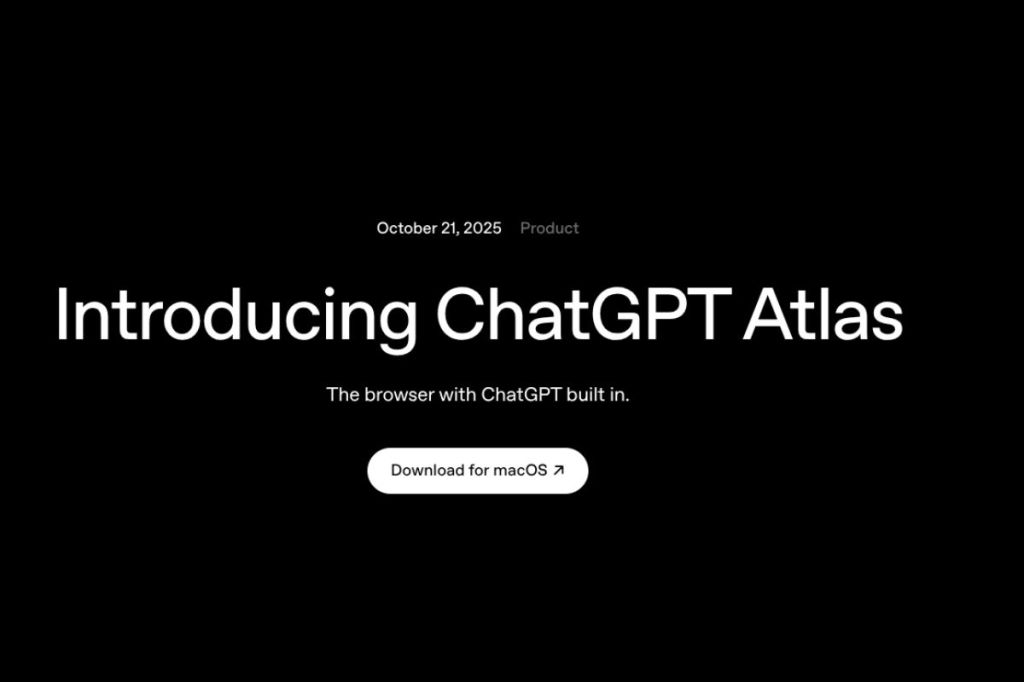
MAJOR NEWS: OpenAI released it’s ChatGPT web browser today. It’s called Atlas and I’m literally learning all about it right now as I type.
WARNING: It’s only available for macOS right now.
In the video I’ve shared below, you’ll find Sam Altman (CEO, OpenAI) and crew enthusiastically guiding you through all of new browser’s features.
At first glance, I’m not too sure how it differs from having Gemini incorporated with your Google Business Suite account. But, I’m sure that as the day goes on, I’ll figure out new uses for it.
They spend a lot of time in the video showing how the browser integrates with the Google suite (Gmail, Docs, Sheets, etc…).
UPDATE: Barry Schwartz published this earlier today, but it’s just hit my inbox. Apparently, Atlas is actually powered by Chromium (the open-source engine that powers Google’s Chrome).
I’m not sure this was intentional to draw others away from Gemini, or an honest attempt to make our lives easier.
I suspect it’s the former, given that the point of all this is to compete and overtake Google.
Meanwhile, here’s a quote from Patrick McDonough, VP of Marketing at Digital Transitions who I asked to try out the new browser at some point today:
Oh, man. I’m so tired of every tech company shoehorning AI into everything. I’ll give it a shot, but a browser with AI built in feels like a solution to a problem I didn’t have.
Damn. But I guess that about sums it all up.
This is one of the issues that I’m finding surrounds AI generated search, as well.
It’s simply something that no one is actually concerned with right now.
IMO, I think that’s because data scraping and digital marketing has become so complex now, that marketers have less and less time for forward thinking.
They’re too busy reading the data and figuring out how to convince an audience to use their products or services over their competitors.
What’s the Biggest Draw to Atlas?
As far as I can initially tell, OpenAI is really trying to focus your attention on using AI agents.
What this means is, when you find a recipe in Atlas, you can have the browser agent (is that what I should call it?) read the article and recipe for you, create a shopping list, and even modify the amounts to buy for the size of the party you’re cooking for.
The OpenAI team provides several other instances where the agent can be useful, but again, I’m not too sure how different it is from Gemini.
So, kudos to Google who implemented (SHOVED) this feature into it’s Suite, whether you asked for it or not. They’ve been slowly sending out updates and ads trying to convince us that incorporating the agent into your everyday workflow will make our lives so much easier.
I’ve given it a try, and I think the biggest issue with agents right now is this:
It takes so long to tell it what to do that you could just do it yourself faster.
AI Agents For Everyday Use Is Not Perfect
Inevitably, the agents are going to get better. I’m thinking “Her” level (the movie with Scarlett Johansson and Joaquin Phoenix).
But right now, without agents having full access to important details of your life (calendars, identification cards and numbers, financial accounts) there really isn’t much they can do.
I want to be able to say to an AI agent,
“Book a trip to London for me,”
and that’s it.
But think about what that actually involves:
- Knowing the type of travel you prefer (Business class, Economy, Fist Class)
- Knowing your accommodation preferences
- Knowing your schedule, and having access to your calendar(s) so it can decide when and for how long
- Searching for trip and accommodation options
- Access to your credit cards or bank account to pay for the trip
- Access to your IDs so it can complete the transaction
I’m sure I’m forgetting steps. But if we were doing this for ourselves, we’d do all of this.
And some of those steps even involve sub-steps.
So actual, useful AI agents are still in the future…whether that’s distant or near, I can’t tell you.
How Will OpenAI’s Atlas Browser Affect Search?
Naturally, my biggest question is this:
How is this going to affect AI generated answers, businesses, and eCommerce?
Obviously, the new era of search is here, and if you’re not worried about how your company is showing in AI answers, you should be.
One common theme I’ve learned about SEO and marketing in general is this:
Almost all companies are slow to move on new developments in digital marketing.
I’m saying this with all confidence. It was only shortly before the pandemic that B2B SEO really took off, but SEO as a practice had been around for nearly two decades in one form or another.
Same with content marketing.
And then, just when CMOs and other execs got used to the idea of using marketing spend for SEO and content marketing, AI changed the game.
My point is, if I had to predict how this is going to affect companies and their brands, I would say the biggest thing you can do right now is start preparing your site for AI generated search answers.
What Are Your Thoughts?
Let me know in the comments or DM me over on LinkedIn.
I’ll keep you posted on anything I learn, please do the same for me.
 Deven Bhagwandin