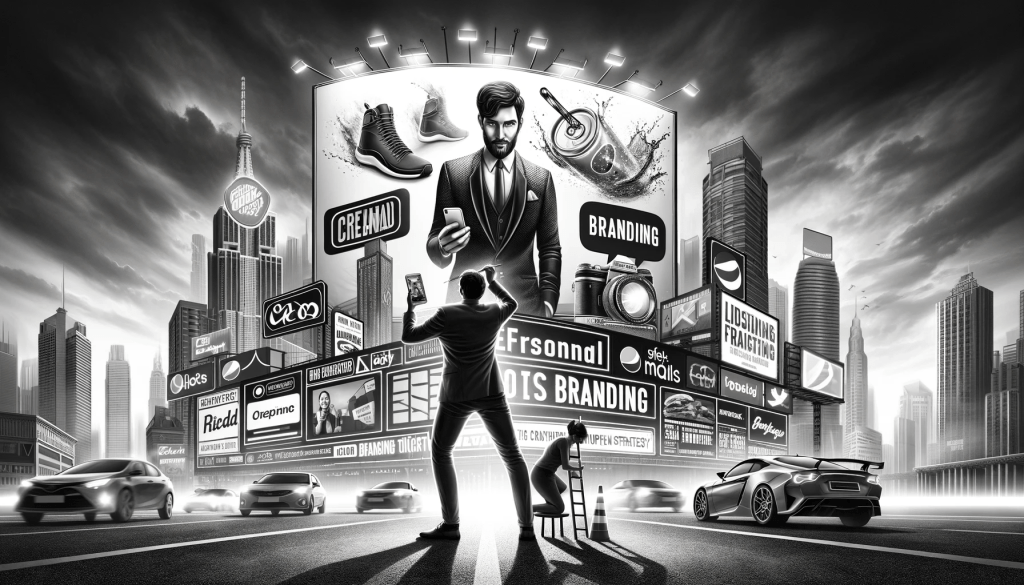
Several years ago, I remember hearing that all celebrities should begin considering themselves a brand instead of just “the talent.”
I think it was Jay-Z who said it, but I’m not sure (if y’all know who it was, please share).
The celebrity quote has stuck with me, and for years, it’s been at the heart of my content strategies.
I feel it’s important that you view your company as a brand, too.
It’s how I approach each client’s strategy, and I’m happy to learn recently that this is a trend that several forward-thinking content strategists are adopting.
It’s hard to think about your small business as a brand when you feel you’re just getting started and all you can focus on is turning a profit.
But things have changed in business. You now have the amazing ability to create an intimate relationship with every single one of your customers via social media and other online channels.
So it’s important that you think in terms of creating an intimate relationship and take advantage of online channels.
What’s the Current Definition of Branding?
Currently, there doesn’t seem to be a consensus on the definition.
I feel it’s important to deconstruct how we currently define “brand” and “branding.” As I pondered these two and did my research, I found some helpful resources.
First up is this quick video from Philip VanDusen, who clearly defines “brand” and “branding” for us:
If you’re like me, it may not have occurred to you that “brand” and “branding” have two different definitions. Here’s VanDusen’s definition of “brand:”
“A brand is a name, term, design, symbol, or any other feature that identifies one seller’s good or service as distinct from those [of] other sellers.”
And here’s his definition of “branding:”
“Branding is architecting and managing the meaning and experience of the brand with intention.”
The final word, “intention,” is important here.
However, there’s another incorrect definition floating around.
When you search “what is branding” in Google search, you get this:
| Google Search defines branding as:The action of marking with a branding iron.The promotion of a particular product or company by means of advertising and distinctive design. |
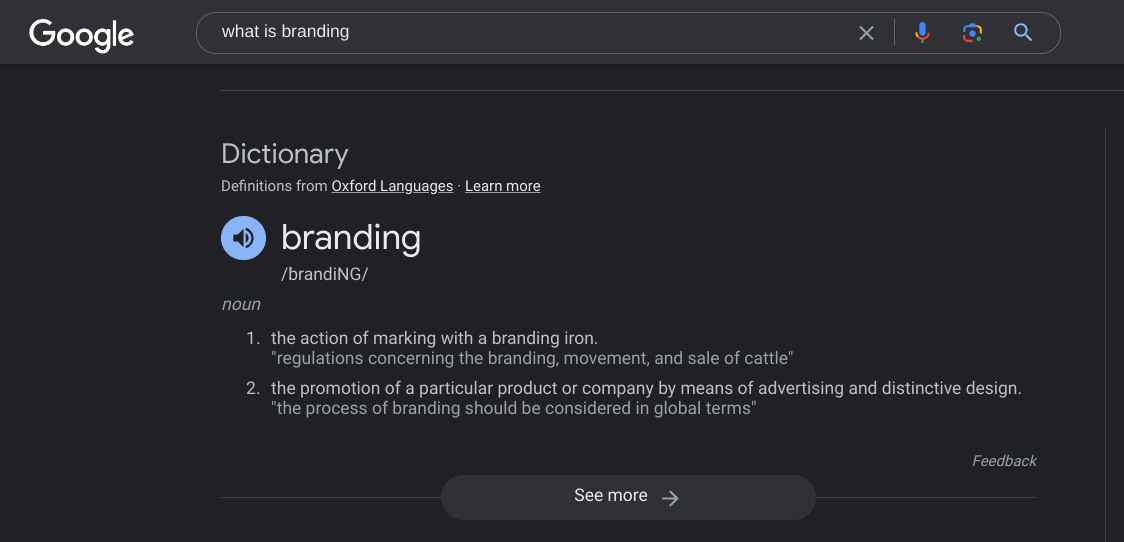
But wait…I’m confused now. I thought VanDusen said branding has more to do with creating and managing the experience your customers have with your brand.
So, why does the definition Google provides say branding is the “promotion” of your company or service?
Isn’t that marketing?
Yes. That’s marketing.
What’s the Current Definition of Marketing?
I think this is where a lot of us get confused because we’re getting an incorrect definition of branding, and that has infiltrated industry speak.
Incidentally, we should all use this as an example of how featured snippets and search results can let us down at times. It’s an example of how search results can make us question whether SEO is manipulated.
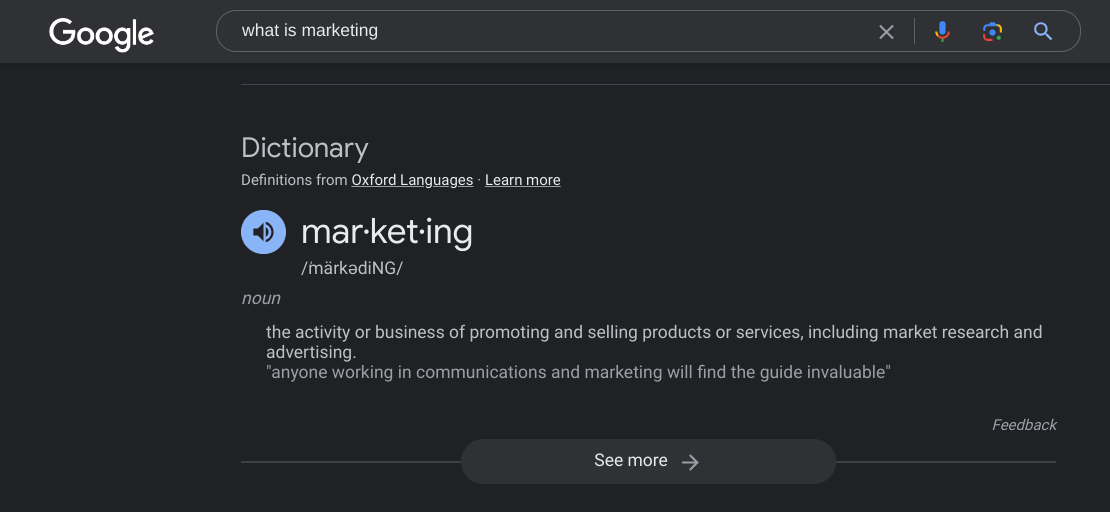
According to Google search, “marketing” is the activity or business of promoting and selling products or services, including market research and advertising.
Your Content Strategy Is Part of Your Branding Strategy
This is where your SEO, content strategy, social media, podcasts, or YouTube channels enter the picture.
All of them are content.
They’re all marketing tools.
This is why you need a complimentary and cohesive content marketing strategy that helps create your brand’s image in your customer’s minds.
If you get this right, you can create a lifetime customer. The big brands understand this. McDonald’s, Adidas, Coca-Cola—they all strive for lifetime customers, and they’re insanely good at it.
Those brands use all of these channels in their branding.
I hate to admit it, but to this day, even though I know it’s unhealthy for me, there are times I crave a Big Mac or Chicken McNuggets.
I still rock Adidas at the gym because, when I was a young, wannabe professional soccer player, Adidas was what all the “cool” guys and my idols wore.
And yes…I’ll drink a Diet Coke from time to time and think to myself, “Diet Coke isn’t so bad, right? I could do this more often, right?”
All of these are amazing examples of how marketing worked on me and created an image of those brands in my head at a young age, and now I recall fond memories associated with those brands.
Think back to when I said that you should consider yourself or your company a brand instead of just a talent, a product, or a service.
With this in mind, start producing content that creates memories in your audience’s heads.
You do this by considering your content as a conversation with each client, no matter the channel or medium.
It doesn’t work if you think of it as:
- A sales pitch.
- A way to shove your products or services into a conversation.
- A way to advertise without paying for advertising.
| “Your brand is the definition consumers hold in their minds of your company and its products. It’s created in two ways: by what you tell people and by what they experience.” 1 |
We will talk about your brand, your branding, and its content strategy next.
Sources:
 Deven Bhagwandin