
The methodically systematic foundations of SEO and content strategy were shaken in late 2022. I’d say we were forced to demolish them.
We’re still rebuilding from the rubble a year later. As a result, many forward-thinking ideas about AI, SEO, and content strategy have arisen. These ideas form the new foundation and structure of Internet marketing.
On December 12th, 2023, Search Engine Journal published its list of twenty-one predictions from SEO experts for 2024, and I’m incredibly excited about what they’re saying. I’m also relieved that the direction my thoughts have taken lately is on par with others in my field.
I’ll take the opportunity to expand on some of the ideas presented and tack on a few of my own. There’s a lot of insight on content strategy below, so as you read, I want you to remember something: there’s an all-encompassing importance of creating “helpful content” before creating SEO or marketing content.
There’s a space for all, but as a content strategist, helping users must be at our core.
Redefining Content Priorities and Shifting from Quantity to Quality

| “…Google will now be taking the top of the funnel for itself.” – Eli Schwartz, Product Led SEO |
Eli’s right. Generative search will handle your top-of-funnel queries, search strategies, and content generation. It’s going to handle the who, what, where, when, why, and how of content writing.
This development enables us to focus on the middle-of-funnel and bottom-of-funnel authentic content that creates engagement.
Right now, I struggle to get leadership and client buy-in about shifting their focus from cheap, non-authoritative content to expertly-written, lower-funnel content.
The obstacle (blinder) that these two groups have is solely based on costs. It’s the age-old leadership and client request: Do more with less money. This command is a fundamental oversight regarding digital marketing and brand building.
They’ve reversed, or even thrown out, the Golden Circle. So, those companies thinking of their wallet as the “why,” “how,” or “what” will always chase revenue and visibility.
Unfortunately, the immediate solution to working with these clients is patience. So, continuously focusing on client education as an integral part of your helpful content strategy is best.
To a content strategist, this means setting realistic expectations, goals, and deadlines and getting an understanding of these from internal teams and clients.
Rise of Multimodal and Topic-Driven Content Marketing

| “So, what should SEOs focus on in 2024? Not AI. Not SGE—content trends.” – Mordy Oberstein, Head of SEO Brand at Wix |
We should think of topics instead of keywords in content production and strategy. This is tangential to the previous idea because it expands on how to handle lower-funnel content after we begin focusing on it more.
*Note: I don’t think that keywords are going away yet, but we need to begin thinking in terms of topics.
We see user preference for topics in action across social media platforms.
Users search with a hashtag or a keyword, and once they find a post, they consume it and then click on the next relevant or trending post.
Additionally, we should recognize that the definition of a user’s journey now encompasses your website, social media, and online presence as a whole. So, it will be harder to rank and deliver ROI with just text-based content.
You should approach your topics with a comprehensive strategy that includes all of these channels. Remember, your audience may start its journey on one channel and jump to another more than once before deciding.
So you must have content at every stage, on every channel.
| “To stay competitive in SERPs, SEO pros and content strategists need to embrace a strategy that involves the creation and optimization of multimodal content—that is, content that includes video, audio, and images, as well as text.” – Katie Morton, Senior Managing Growth Editor, SEJ |
Katie reinforces the modern, holistic approach and names what to consider as part of your entire content strategy.
Let’s take a step back and think about this: What’s the state of content marketing?
Right now, content strategies can be siloed and take entirely different approaches to advertising, social media, online public relations, and content.
Siloing your strategies hurts in a few ways.
First, it’s expensive.
Creating content costs budget and resources. Creating content for multiple strategies means spending resources and budgeting for each strategy.
I’ve worked with several clients who use multiple agencies for different aspects of their marketing strategy. I’m always curious, and the typical answer is, “Agency A is better at such and such than Agency B.”
I wholly understand this because we’re all specialists in one aspect of digital marketing, but it will be imperative that you enable these agencies or teams to collaborate on the entire strategy ecosystem.
Perhaps teams will shift from one Chief Marketing Officer or strategist to a panel. Either way, a cohesive approach will help ensure future success.
Second, it’s best to present a united brand across all channels.
Your audience must easily find you, which means you need to go to them.
To me, this means meeting them on social media, YouTube, or podcasts while they’re in their cars, in public, or at home. It also means creating a seamless way to move from one to the next. This is similar to starting a TV show in one room and continuing it in another room without restarting, rewinding, or needing a recap.
Theoretically, we can make this transition with smartphones. You can start a YouTube video and keep the audio playing as you move around or use closed-captioning, but currently, it involves staying on YouTube.
I believe there will be a better way to move between channels soon. Let’s see how the Humane AI Pin does. If this takes off, we’ll have the opportunity to think about how to create content for wearable AI.
Text-based content will still be important, but less so as that audience ages or adopts new technologies.
Third, it’s outdated.
Fifteen years ago, social media and SEO were buzzwords, and companies treated them as such. Leadership knew they could help with customer acquisition and might have hired an agency to dabble in one or both.
However, it was nearly impossible to map SEO content and social media into ROI.
So, without a clear path to ROI, these marketing agencies were beholden to leadership’s old ways of thinking and the traditional ways of ensuring a return.
However, this isn’t the case anymore. Our marketing tools can easily track the customer journey, and leadership understands digital marketing and its potential. They’re finally catching up and accepting online marketing tactics and costs.
So, the new obstacle is going to be convincing them that everything they’ve just learned is already outdated.
Shifting to Human-Centric Content Creation to Build Trust and Authority
| “Social media platforms have become significant search engines for many people, particularly when they’re looking for information about experiences like travel, holidays, or the latest trends.” “On the other hand, topics related to medical and financial matters still tend to be searched for on Google. So, it’s important to figure out where your target audience is searching and adjust your content strategy accordingly.” – Suganthan Mohanadasan, Snippet Digital |
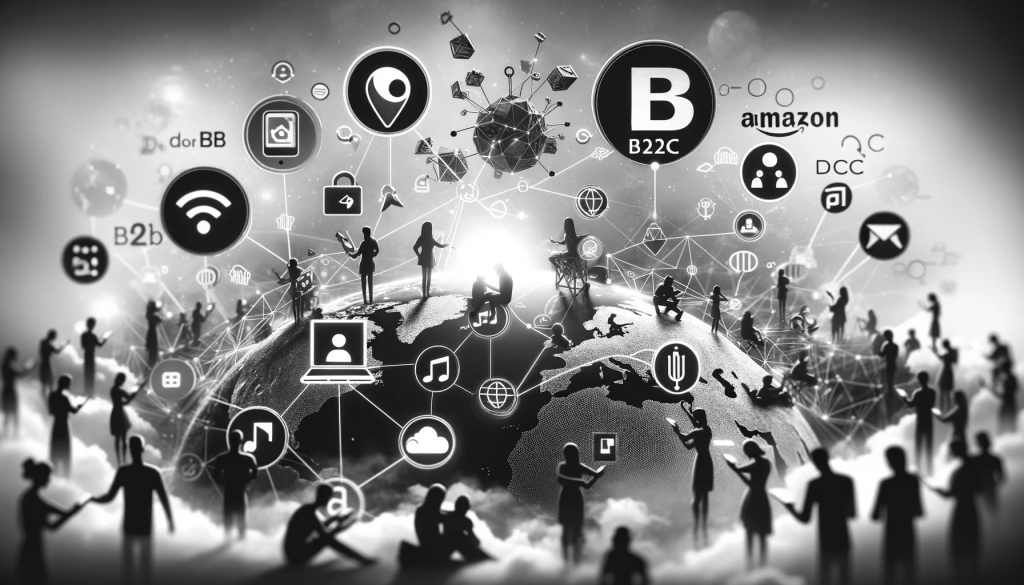
Whether B2B or D2C, all content is shifting towards peer-to-peer-created content. Right now, its importance is extremely apparent in D2C eCommerce, based on what’s happening on social media and even Amazon.
It’s why Amazon added the Inspire tab to its app early in 2023?
It’s why Keith Lee is a huge TikTok star for his restaurant and food reviews.
When you think about it, Google’s E-E-A-T guidelines heavily encourage peer-to-peer content.
Google states that product reviews should be written by qualified reviewers who can competently comment on features and tie them to use-case scenarios.
Comparisons should be made by proven experts who’ve taken the time to test the products and present their results in an applicable way to their audience.
Those are the experience and expertise.
Google also emphasizes that reviewers must be trusted enough to make you respect them.
How does Google define trust?
By having a large following, entire content clusters surrounding a topic, and a path that proves that the content creator’s followers are sharing their content to attract more followers.
Trust, experience, and expertise bring authoritativeness.
This is what the internet was originally designed to be, and Google is now waking us from the zombified act of flooding the internet with B.S. content that’s uninteresting, unengaging, and designed by robots for robots.
I feel the first half of the quote from Mohanadasan directly applies to D2C brands. The second half applies to B2B brands.
Yes, there is a crossover. But overall, his quote drives home the fact that you must employ a holistic content strategy.
It also highlights the importance of influencer marketing.
Whether you’re working with a highly niche influencer with a small following of a few thousand or a celebrity with millions following them, collaborating with them can drive home why your audience should choose you over your competitors.
Understanding the Role of AI in Marketing and Its Limitations
Some in leadership are reluctant to allow AI-written content into their online content and marketing strategies.
I think this reluctance is shortsighted and somewhat egotistical; I take it to mean their mindset is, “We’re better than AI-written content.”
However, Google states that AI-written content is okay if it’s not spammy.
We can argue whether “spammy” means that you’re producing too much content or whether the content is low-quality.
I suspect Google means both, and my fear is that businesses with the “no AI” mindset are going to be left out and disappear from search altogether.
If you’re reluctant to accept AI, you must shift your mindset and realize it’s not going away. In fact, several news outlets and even Google have been quietly using AI to generate snippets of content for at least ten years.
So, if traditional news outlets and Google have accepted AI content, it’s time we all accepted it.
I don’t believe that AI content is the issue. I don’t think it’s ever been the issue.
The root issue is finding trustworthy and helpful content.
And trustworthy, helpful content that actually convinces another human to try, do, or buy something still (and only) comes from humans.
Here’s another example: Think of those ads in Blade Runner and Altered Carbon. They were unemotional and tone-deaf, and you could immediately tell they were generic and robotic. You could immediately tell the personality was forced and programmed.
That’s what AI content is right now.
But it will get better.
When? Quickly.
Define quickly. We can’t yet. We thought we’d have self-driving cars now, and look how that’s going.
Long story short, AI-generated content is okay as long as you don’t overestimate its usefulness or capabilities.
Right now, human-generated content is still what humans respond best to.
We should all take a holistic approach to content strategy. Those stuck in a text-only content environment will increasingly fall behind.
I believe we’re in the midst of a content revolution, and I’d like to thank Search Engine Journal and its contributors for helping me organize my thoughts.
The good thing is that search isn’t going anywhere. Whether users are typing or speaking, they’re still searching for answers.
If you’ve learned that you’re still associating search with written or text-based content only, it’s time to book a consultation with a content strategist.
 Deven Bhagwandin